UGC Creator: The Complete Guide to Becoming a UGC Creator in 2026
Social media has completely changed the way brands communicate with their customers. Traditional advertisements are still important, but modern consumers increasingly prefer content that feels authentic, relatable, and trustworthy. This growing demand has created new opportunities for UGC creators.
UGC stands for User-Generated Content. A UGC creator is a content creator who produces videos, photos, reviews, testimonials, tutorials, unboxing videos, and other forms of content that brands can use for marketing.
One of the biggest advantages of becoming a UGC creator is that you don’t necessarily need thousands of followers. Brands are often more interested in your ability to create engaging content than your follower count.
Whether you are a beginner, digital marketing student, influencer, freelancer, or someone interested in content creation, UGC can be a valuable skill to learn.
In this complete guide, you’ll learn what a UGC creator is, what UGC creators do, how to become a UGC creator, how to build a UGC portfolio, how to find UGC creator jobs, how much creators can charge, and how UGC helps brands with digital marketing.
What Is a UGC Creator?
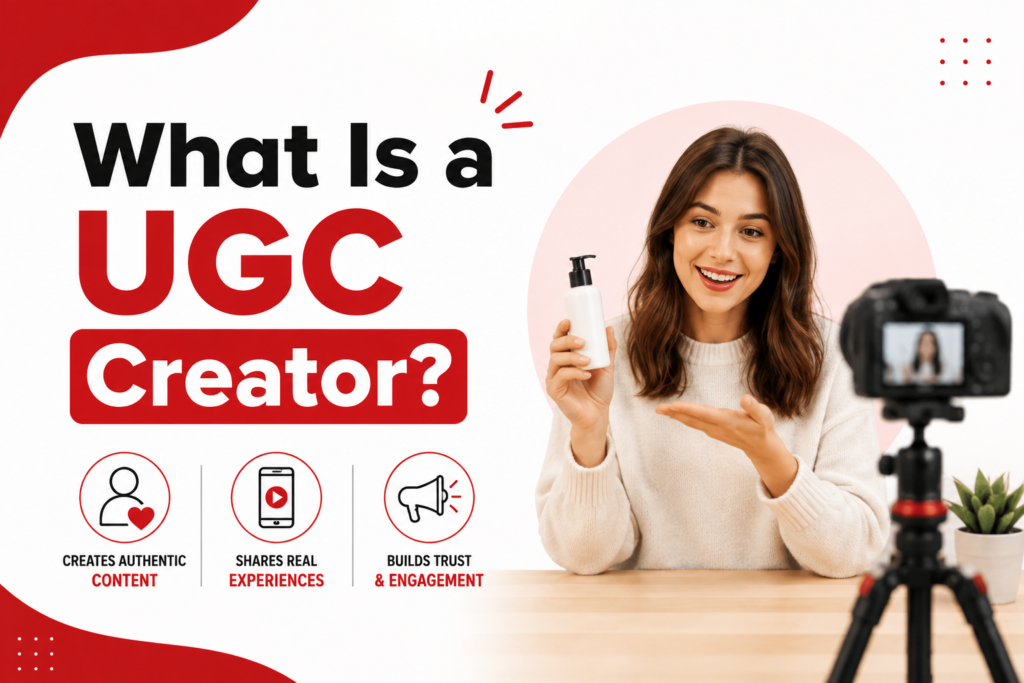
A UGC creator is someone who creates content that promotes or demonstrates a brand’s product or service in an authentic and relatable way.
For example, imagine a skincare company launches a new face wash. Instead of creating a highly produced television advertisement, the company may hire a UGC creator to make a short video showing how they use the product in their daily routine.
The creator might record themselves:
- Introducing the product
- Showing the packaging
- Demonstrating how to use it
- Explaining its features
- Sharing their experience
- Giving a call to action
The brand can then use this content on social media, its website, or advertising campaigns, depending on the agreed usage rights.
UGC creators essentially help brands produce customer-style content that can support their marketing efforts.
UGC Creator vs Influencer: What’s the Difference?
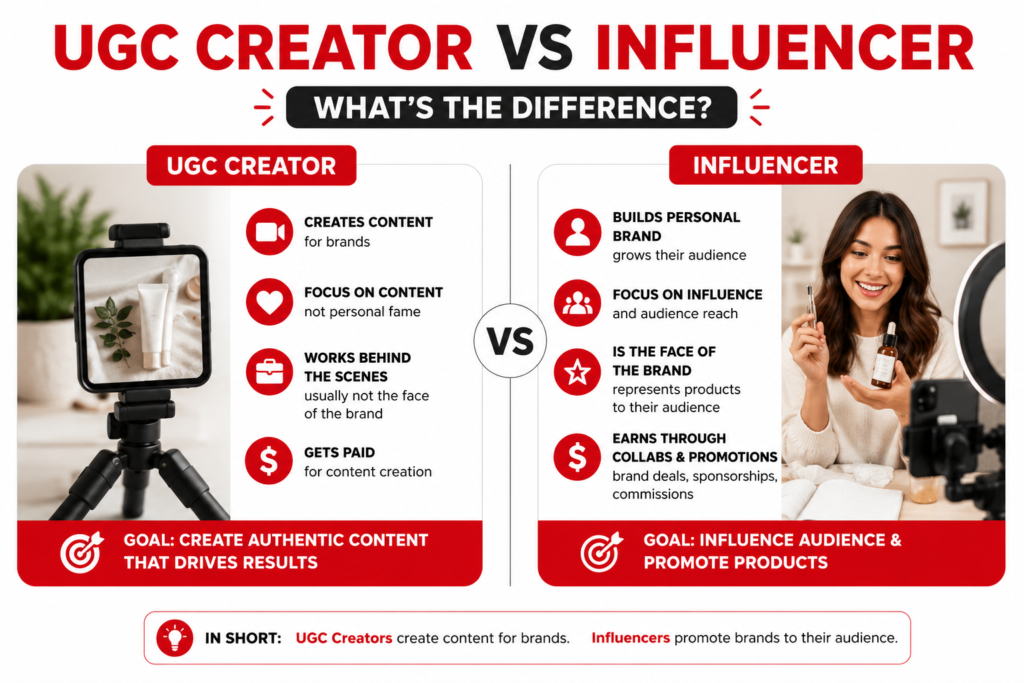
UGC creators and influencers are often considered the same, but there is an important difference.
An influencer generally promotes products to their own audience. Their followers, engagement rate, niche, and audience demographics can be important to brands.
A UGC creator, on the other hand, is primarily hired to create content for the brand.
For example:
Influencer:
“I have 50,000 followers and I’ll promote your product to my audience.”
UGC Creator:
“I can create three short-form videos showing your product that your brand can use in its marketing.”
This means you can become a UGC creator even if you have a small audience.
The main value of UGC creation is content production, while influencer marketing is heavily connected to audience reach.
Some people also work as both influencers and UGC creators.
Why Is UGC Important for Brands?
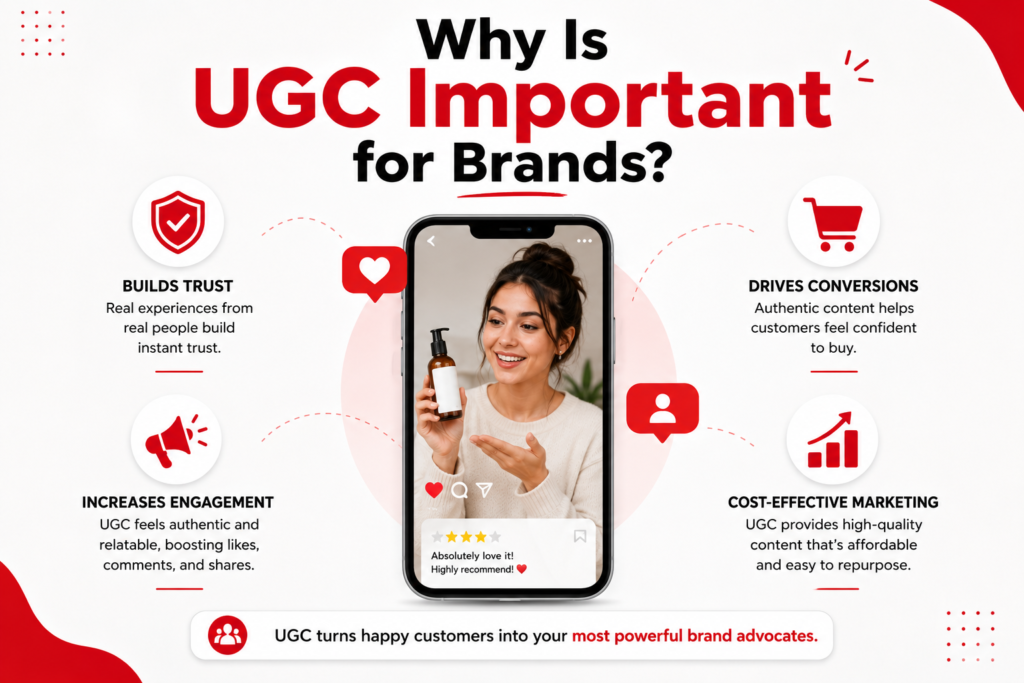
UGC has become an important part of modern digital marketing because consumers often want to see products being used by real people.
1. UGC Feels Authentic
Traditional advertisements can sometimes feel overly promotional. UGC can make a product demonstration feel more natural and relatable.
2. UGC Can Build Trust
Seeing someone demonstrate a product can help potential customers understand how it works and what it looks like in real-life situations.
3. UGC Supports Social Media Marketing
Short-form videos are widely used across social media platforms. Brands can use UGC-style content to keep their social media feeds fresh and engaging.
4. UGC Provides Advertising Creatives
Brands can use creator-produced videos as advertising creatives when the necessary usage rights have been agreed upon.
5. UGC Can Support Conversions
A well-made product demonstration, testimonial, or problem-solution video can help customers understand a product and move closer to making a purchase.
What Does a UGC Creator Do?
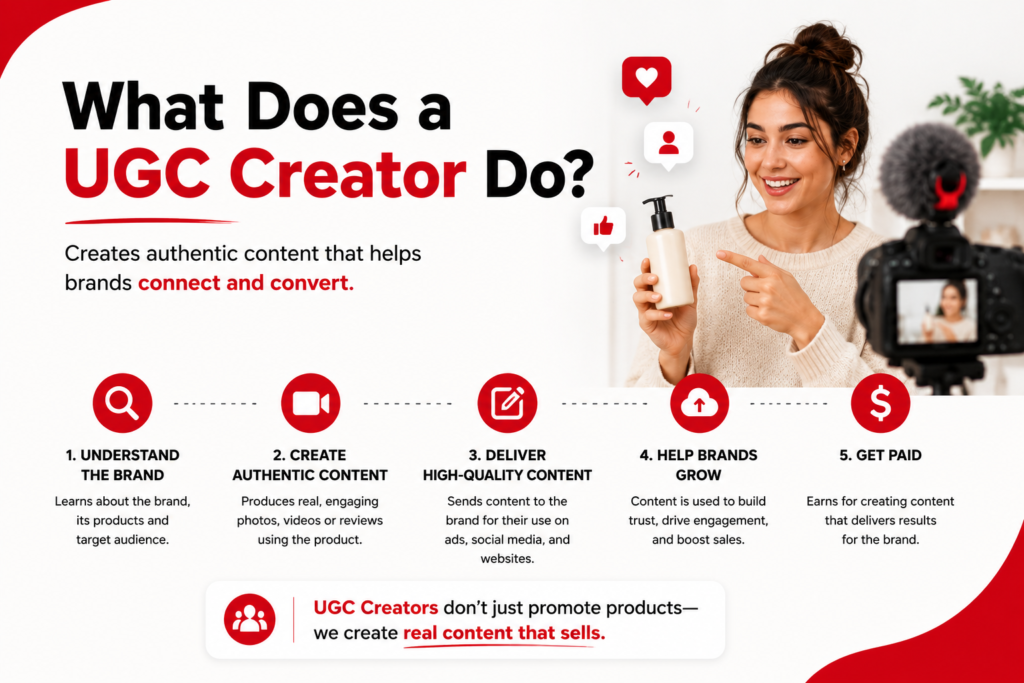
Being a UGC creator involves more than simply recording yourself with a product.
A professional UGC creator may be responsible for:
- Researching the brand
- Understanding the target audience
- Developing content ideas
- Writing scripts
- Recording videos
- Taking product photographs
- Editing videos
- Adding captions and text
- Following brand guidelines
- Making revisions
- Delivering content on time
- Communicating with clients
- Understanding content usage requirements
A successful creator combines creativity, communication, content creation, and basic marketing knowledge.
Types of UGC Content
There are many different types of content that UGC creators can produce.
1. Unboxing Videos
Unboxing videos show the process of opening a product and discovering what is inside the package.
This format can highlight:
- Packaging
- Product design
- Accessories
- First impressions
- Product features
2. Product Reviews
A review-style video explains the creator’s experience with a product.
The content should be honest and follow the brand’s requirements without making false claims.
3. Product Demonstrations
A product demonstration shows viewers how a product works.
For example, a technology brand might hire a creator to demonstrate how a new gadget works.
4. Tutorials
Tutorials teach viewers how to use a product or complete a particular task.
Beauty, software, cooking, fitness, and technology brands can benefit from tutorial-style UGC.
5. Testimonials
A testimonial-style video explains the creator’s experience with a product or service.
6. Lifestyle Videos
Lifestyle UGC integrates a product naturally into everyday life.
For example, a creator could show a coffee product as part of their morning routine.
7. Problem-Solution Videos
This format starts with a problem and introduces the product as part of the solution.
For example:
Problem → Product → Demonstration → Result → Call to Action
This structure can work particularly well for marketing content.
How to Become a UGC Creator
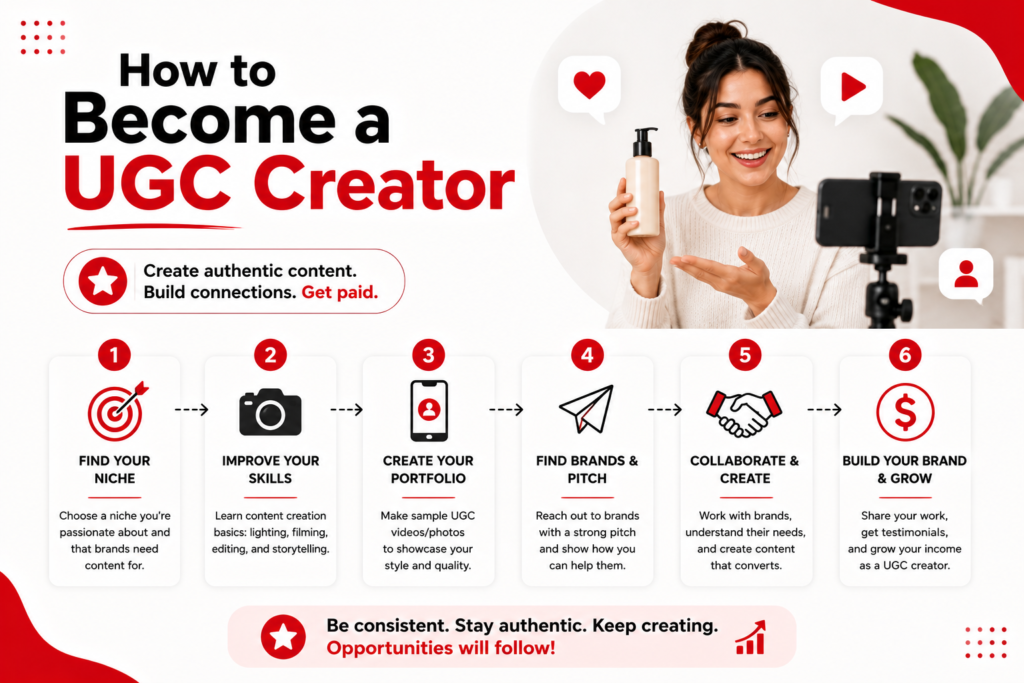
If you want to become a UGC creator, you don’t have to wait until a brand contacts you.
Follow these steps to get started.
Step 1: Choose a Niche
Start by choosing a niche that interests you.
Popular UGC niches include:
- Beauty
- Skincare
- Fashion
- Fitness
- Food
- Travel
- Technology
- Lifestyle
- Home products
- Personal care
- Apps and software
You can eventually work across multiple industries, but having a clear starting niche can make your portfolio more focused.
Step 2: Learn Content Creation
You should understand the basics of creating short-form content.
Learn about:
- Lighting
- Camera angles
- Composition
- Storytelling
- Hooks
- Voiceovers
- Video editing
- Captions
- Music
- Calls to action
You don’t need to become an expert immediately. Practice is one of the best ways to improve.
Step 3: Create Sample UGC Content
You don’t need a paying client to create your first UGC videos.
Use products you already own and create sample content.
For example, create:
- One unboxing video
- One product demonstration
- One testimonial-style video
- One problem-solution video
- One lifestyle video
If these are not paid collaborations, present them honestly as sample or portfolio work.
Step 4: Build a UGC Creator Portfolio
A UGC creator portfolio is one of your most important tools when approaching brands.
Your portfolio should demonstrate what you can create.
Include:
- Introduction
- About you
- Your niche
- Sample videos
- Product photography
- Services
- Previous client work, if available
- Testimonials, if available
- Contact information
Keep your strongest work near the beginning.
How to Create a UGC Creator Portfolio
You don’t need a complicated website.
A simple portfolio can have five main sections.
About Me
Briefly introduce yourself and explain your content style.
My Work
Display your best videos and photos.
Services
List the content you offer, such as:
- Product videos
- Unboxing videos
- Testimonials
- Lifestyle content
- Product photography
- Short-form videos
Why Work With Me?
Explain what makes your content valuable.
You could highlight:
- Fast communication
- Creative ideas
- Reliable delivery
- Understanding of social media
- Marketing knowledge
Contact
Make it easy for brands to contact you.
A professional email address and simple contact form can be enough.
How to Find UGC Creator Jobs
Once your portfolio is ready, the next step is finding clients.
Direct Brand Outreach
Research brands that match your niche and contact them directly.
Your message should be personalized instead of sending the same generic message to every company.
Mention:
- Why you like the brand
- What type of content you can create
- How your content could help them
- Your portfolio
Social Media
Follow brands and marketing professionals in your niche.
Some companies announce creator opportunities through their social media channels.
Creator Platforms
There are platforms and marketplaces that connect brands with content creators.
These can be useful when you’re looking for your first opportunities.
Freelance Platforms
You can also offer UGC creation as a freelance service.
Create a clear profile showing your niche, services, examples, and pricing structure.
How Much Do UGC Creators Make?
There is no fixed salary for UGC creators because most work is project-based.
Rates can vary based on:
- Experience
- Content type
- Number of videos
- Video length
- Editing requirements
- Scriptwriting
- Revisions
- Turnaround time
- Usage rights
- Paid advertising rights
- Exclusivity
A beginner may start with smaller projects while building their portfolio.
As your skills, portfolio, and client experience grow, you can gradually increase your rates.
Remember that you are not only charging for the time spent recording. You’re also providing creative ideas, production, editing, communication, and potentially licensing the brand to use your content.
What Are UGC Usage Rights?
Usage rights are an important part of UGC work.
When you create content for a brand, you should understand how the company is allowed to use that content.
For example, a brand might want to use your video:
- On Instagram
- On TikTok
- On its website
- In email marketing
- In paid advertisements
These different uses can affect the value of the project.
Before accepting a project, make sure you understand:
- Where the content will be used
- How long it will be used
- Whether paid advertising is included
- Whether exclusivity applies
- How many revisions are included
Clear agreements can prevent misunderstandings between creators and brands.
UGC Content Ideas for Beginners
If you’re struggling to create your first portfolio, try these ideas.
“Three Reasons I Like This Product”
Show the product and explain three useful features.
“I Tried This for the First Time”
Create a first-impression style video.
“Before You Buy This…”
Explain important features or considerations.
“How I Use This Product”
Show the product naturally as part of your daily routine.
“Problem to Solution”
Start with a common problem and demonstrate how the product fits into a solution.
“Unboxing”
Create a visually interesting unboxing video with close-up shots.
These ideas can help you practice different UGC formats before working with real clients.
How to Make a Good UGC Video
A successful UGC video isn’t necessarily about having the most expensive camera.
The most important elements are hook, story, demonstration, authenticity, and call to action.
Start With a Strong Hook
The opening seconds should make the viewer want to continue watching.
Instead of starting with a long introduction, create curiosity.
For example:
“I didn’t expect this product to become part of my daily routine.”
Show the Product Quickly
Don’t make viewers wait too long to understand what the video is about.
Show the product naturally and clearly.
Keep It Conversational
UGC should generally feel natural rather than like someone reading a traditional advertisement.
Focus on One Main Message
Don’t try to explain every feature.
Choose one key benefit or message and build the video around it.
Add a Clear CTA
Finish with an appropriate call to action, such as:
- Learn more
- Visit the website
- Try it yourself
- Shop now
- Download the app
Equipment Needed to Become a UGC Creator
You don’t need an expensive studio to begin.
A basic setup can include:
- Smartphone
- Tripod
- Natural lighting
- Affordable LED light
- Microphone
- Simple background
- Video editing application
Your smartphone can be enough to create your first portfolio.
As you get more projects, you can invest in additional equipment.
The most important investment at the beginning is not expensive equipment—it is developing your content creation skills.
Skills Every UGC Creator Should Develop
A successful UGC creator needs a combination of creative and business skills.
Creative Skills
Learn:
- Video creation
- Photography
- Storytelling
- Editing
- Copywriting
- Content planning
Communication Skills
You should be able to:
- Understand client requirements
- Ask clear questions
- Give professional responses
- Handle feedback
- Meet deadlines
Marketing Skills
Basic digital marketing knowledge can make your content more valuable.
Learn about:
- Target audiences
- Customer journeys
- Marketing funnels
- Social media marketing
- Advertising
- Calls to action
- Conversion-focused content
This is where UGC and digital marketing connect.
Common UGC Creator Mistakes
1. Focusing Only on Followers
You don’t necessarily need a large following to create UGC.
Focus on creating excellent content.
2. Having No Portfolio
Brands need evidence of your skills.
Create sample work before approaching clients.
3. Using Poor Lighting
Even a good video can look unprofessional if the lighting is poor.
Use natural light or a simple light source.
4. Making Videos Too Promotional
Content that feels overly scripted can lose the natural quality that makes UGC attractive.
5. Ignoring Usage Rights
Always clarify how the brand can use your content.
6. Missing Deadlines
Professionalism matters. Deliver content according to the agreed timeline.
7. Copying Other Creators
Trends can provide inspiration, but your portfolio should demonstrate your own creativity and style.
UGC and Digital Marketing
UGC is not just a content creation trend. It can be part of a broader digital marketing strategy.
A brand can use UGC at different stages of the customer journey.
Awareness
UGC can introduce products to potential customers.
Consideration
Demonstrations, tutorials, and reviews can help customers understand a product.
Conversion
Strong UGC advertisements can encourage potential customers to take action.
Retention
Brands can also use customer-style content to maintain engagement with existing customers.
This is why marketers increasingly view UGC as a useful source of creative material for social media and advertising.
Future of UGC Creators
The creator economy continues to create opportunities for people who can produce engaging digital content.
Brands need fresh content for:
- Social media
- Websites
- Online stores
- Advertising
- Email campaigns
- Product launches
This means creators who understand both content creation and marketing can offer additional value to businesses.
The future of UGC is not simply about creating attractive videos. Successful creators will increasingly need to understand the brand’s audience, marketing objectives, customer journey, and content performance.
Frequently Asked Questions About UGC Creators
Do I need followers to become a UGC creator?
No. UGC creators are generally hired for their ability to produce content, so a large following is not necessarily required.
Can beginners become UGC creators?
Yes. Beginners can create sample videos, build a portfolio, and start contacting relevant brands.
Do UGC creators need expensive cameras?
No. A modern smartphone can be enough to start.
How do UGC creators find brands?
Creators can use direct outreach, social media, freelance platforms, creator marketplaces, networking, and UGC platforms.
Can I become a UGC creator from home?
Yes. Many UGC projects can be created from home, depending on the campaign requirements.
Is UGC the same as influencer marketing?
No. Influencer marketing primarily focuses on reaching an influencer’s audience, while UGC focuses on creating content for a brand.
What should I include in my UGC portfolio?
Include your best sample videos, photos, niche, services, short introduction, testimonials if available, and contact information.
Conclusion
Becoming a UGC creator can be a great opportunity for people interested in content creation, social media, and digital marketing.
You don’t need thousands of followers or expensive equipment to get started. Begin with a smartphone, choose a niche, practice creating different types of content, and build a strong UGC creator portfolio.
Once you have a portfolio, start reaching out to relevant brands and explore UGC creator jobs, freelance opportunities, and creator platforms.
Most importantly, remember that brands aren’t simply looking for someone who can record a video. They want creators who understand how to communicate a product’s value in an authentic, engaging, and marketing-focused way.
Start small, keep improving your skills, learn the fundamentals of digital marketing, and build strong relationships with brands.
Your first UGC video doesn’t need to be perfect. It just needs to be the beginning.